
“Teach me to do your will, for you are my God; may your good Spirit lead me on level ground.”
Psalm 143:10
I recently had the bittersweet privilege of delivering the eulogy for my cherished father-in-law at his memorial service. As I pieced it together, I listened as the family filled in many details, and those days were deep and nourishing. Some of the discoveries were stunning, as you’ll see. Duane treated Scott like a son and me like a daughter, and he was a wonderful grandfather to our boys. Here is his story.
In the little town of Croswell, Michigan, a rural farming community right up in the thumb of the mitten-shaped state, a baby boy made his squalling entrance into the world. It happened privately at the house of his aunt. And it was not on New Year’s Eve of 1933, as his birth certificate states, but just after midnight on New Year’s Day in 1934.
1933 was the height of the Great Depression and the same year that the commercial banking industry collapsed1. Twenty-five percent of Americans were unemployed, wages had dropped by nearly half within that year, the tax rate had quadrupled the year before, and tax deductions had been slashed2. A family who had a baby on December 31st could still get a tax deduction for that child, but after all the math was done, it would only save them about $1.33 because the deductions were prorated according to how much of the year was remaining. But when average families were only making $821 a year, an extra $1.33 still meant something. And for a family with less than average, then of course it meant much more.
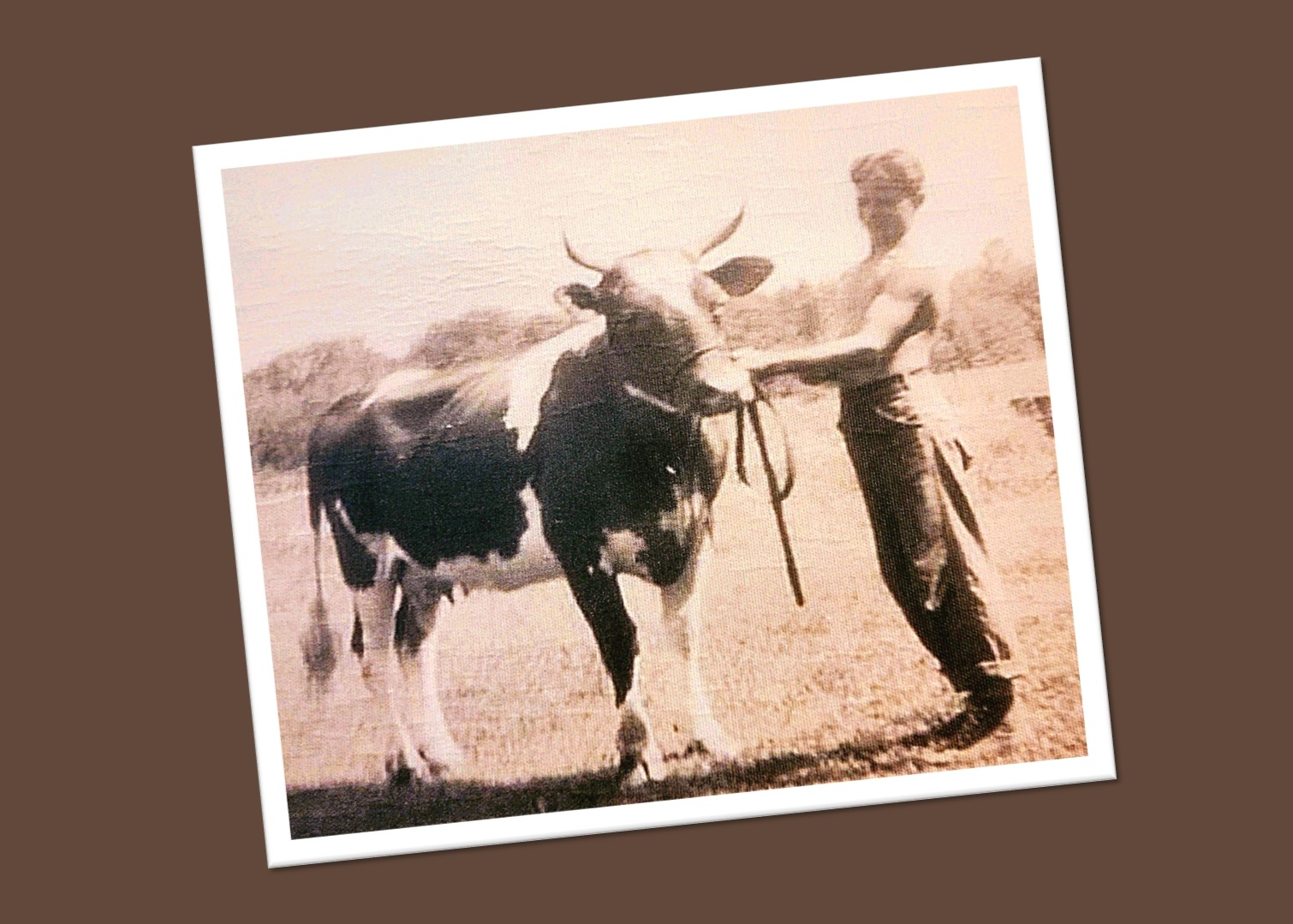
Duane’s parents were simple, loving laborers, and they and the times taught him early the necessity and reward of hard work, initiative, flexibility, a healthy touch of scrappiness, and an abundance of affable charm. His father, Vernie, was respected for his skillful work on the road commission and in harness racing for the Fair Board, and his mother, Leila, was industrious and resourceful in retail and odd jobs to supplement the family income. Hard times prompted them to move their family to 21 different homes in 17 years, which meant that Duane and his older brother Jim transferred to numerous schools before the 9th grade. As a teen, Duane helped care for the family’s cows and worked at a drug store in town, both in the pharmacy and at the soda fountain (“Soda jerk” was what they called that job back then). He loved sports—playing baseball and football, running track, and following University of Michigan athletics—but his most cherished accomplishment came through 4-H and raising a prize-winning cow named Stardust, whom he remembered fondly throughout his life.
Now, Duane’s birth just after midnight on New Year’s Day was a detail that would prove to be significant to him. For reasons unknown—whether for a $1.33 tax advantage or not—his birthdate was recorded as the last day of 1933, rather than as the first day of 1934. Duane would often say that without that error, his life could have turned out very, very differently, and he loved to tell about it.
He had attended a one-room schoolhouse in which younger kids listened to the lessons of the students who were just ahead of them and often received their help. His favorite among those older students, he said, was Joyce Bingle. Duane often marveled with thankfulness, “Had my birthdate been recorded correctly as January 1, I would not have been eligible to start school when I did. I would have had to wait another year and would have been too far behind Joyce to get to know her.” He said that even in such a small town, he might have never met her because of his turbulent schooling and the eventual promotion of older students to other schools. “Imagine all the people and experiences I could have missed!” he would say.
After graduation, it was the sale of Stardust that enabled him to purchase an engagement ring for Joyce, and they married in 1952. Duane enrolled in the United States Air Force, and after he completed basic training in Texas, the couple moved to Illinois and to Alaska, where Duane served as a Medic Corpsman (the drugstore pharmacy experience serving him well). Within three years, their son, Randy, was born, so to earn additional income for his growing family, Duane the entrepreneur leaned into the industriousness and charm he had developed as a child and started a side hustle as a barber, immediately leveraging those earnings as a lender, receiving interest income by making microloans to his fellow troops. These two businesses, born of necessity, would show up in his life again.
Joyce left the long, dark winters of Alaska and returned to Croswell with their baby boy, and Duane followed a year later, after completing his military service. They built a house on family land next to Joyce’s parents, Leonard and Hilda Bingle, and in 1965, ten years after Randy was born, they welcomed not one baby girl into the family, but—surprise!—two of them: twin daughters, Peggy and Penny.
Now, just before the young family’s return to Croswell, the Bingles had been on their own surprising journey. Hilda, Duane’s mother-in-law, had accepted Christ. Shortly thereafter, she had lifted her husband, wasting away with terminal lung cancer, into the back seat of the car and had driven him all the way to an Oral Roberts revival service in Pennsylvania over 400 miles away. It might have been a miracle that they even got there because Hilda had never driven a car before she put the keys into the ignition that day, but they made it, and Duane’s father-in-law (Leonard) had accepted Christ at that worship service. But it certainly was a miracle when Leonard himself drove them back home again a few days later, fully healed of his lung cancer and still alive and healthy 40 years later to tell about it. University of Michigan specialists had declared his cancer incurable, his deterioration had been profound, and Duane had never expected to see him again.
So imagine the story and the testimony of faith that the Bingles told when they welcomed their daughter and son-in-law and grandson Randy back home! They cared for them. They lovingly and exuberantly shared their newfound faith with them. And Duane and Joyce soon surrendered their own lives to Jesus and joyfully expressed their faith in him.
Grandpa Bing, as the family would call him, taught Duane what a Christian man should be, and Duane was devoted to him. Duane is known to have said that he and his in-laws never had tension with one another, not even once, and his kids believe it to this day.
As Duane and Joyce raised their children, they became active at Croswell Wesleyan Church, which received a new pastor in 1968: Elmer Drury, with his wife JoAn and daughter Kathleen, who was the same age as Peggy and Penny. The pastor’s family lived in the church parsonage, which had been Duane’s aunt’s house—the same house, in fact, in which Duane was born.
The two couples struck up an instant friendship and cooperated seamlessly in ministry. Joyce and Duane extended generous hospitality to connect people to the church and to one another. The Cutler home was always open. Coffee was always offered. Cards, talking, Euchre, teens, elderly people, Christian and not, ten people or two, anytime and always. They served in children’s, youth, adult, and administrative ministries. Duane was vice-chair of the church board and taught a Sunday School class that nurtured many new believers in faith, growing to well over 100 attenders each week in that small town. The two families became so close that when Elmer and JoAn adopted a son a year later (Scott), they introduced him first to Duane and Joyce, stopping by their house on the way home from the adoption agency.
Outside of church, Duane worked as a barber, and he continued to build and grow the business until 1969. One day, an executive from Citizens Federal Savings & Loan (which later became Citizens First Savings Bank) came in for a haircut and urged Duane to apply for an entry-level position at the bank. Even though it offered less pay, Duane saw that it promised greater opportunity and development, so he asked his pastor Elmer to pray with him for wisdom. He did apply and was accepted. At his interview, the president of the bank asked Duane what he really wanted in working there. “I want your job,” Duane replied with a wink and a chuckle. That was 1969. Twenty-two years later, that statement would come true, and he served as president until his retirement.
Around that time, Duane lost Joyce to illness. They had been married for 40 years. Deep in his grief, he reached out to a long-time friend living far away who had also been widowed during the intervening years. Already well acquainted through decades of family friendship, the two quickly discovered a spark—though his adult children all recall it as more like a blazing inferno, prompting some role reversals: “Mom, what do you mean ‘he’s coming to visit’ you? Well, don’t stay out late!” And “Dad, you need to cool your jets!”
Duane and JoAn were married in 1993, and they have cherished each other, as they and their kids say, like “two peas in a pod” ever since. They have lived in Michigan, Florida, and North Carolina, where they have danced3 and hosted and golfed and gardened and smooched and driven fast cars. They’ve walked on beaches. They’ve made pancakes. They’ve driven grandkids to the donut shop (“in the front seat and we didn’t even have to wear seatbelts!” our toddlers once gleefully reported). They’ve prayed and read scripture on the front porch with their dogs and marveled at the beauty of creation, and they’ve served local churches with their time, talent, and treasure. In September, Duane and JoAn would have celebrated their 31st wedding anniversary, modeling to all of us the abundance of a marriage of two people committed to Christ.
We all know that Duane has faced some intensifying health challenges, and when he slipped away so peacefully this past Sunday night, surrounded by his grateful and adoring family and caregiver Becky, I could not help but give thanks and praise to God for crowning Duane’s life with answered prayer. See, Duane had been clear to us about three yearnings of his heart, and I am sure he was clear to the Lord about them, too.
One, he yearned for all of us to know that he loved us. Oh, how well we know it! He loved us wholeheartedly. He stated it often, even more as speech began to fail him in his last years and he anticipated the possibility that he might no longer be able to verbalize it. And he lived it out every day. I remember when we used to visit, and I’d wake up in the morning with a steaming coffee cup right in my face, millimeters from my nose—”Hey, Sweetie, ready for a cup of coffee?” he’d ask so very cheerfully—and so very early in the morning! He once helped me paint a single wall in my laundry room barnyard red, though he told me he didn’t know why on earth I’d ever pick that color for a laundry room. He then helped paint our den a neutral sand color, which he said was better, but he wasn’t thrilled about that color, either—so he drove me to Home Depot 150 times to help me pick the right one. We could never out-serve him or out-give him, could we? He was always ahead of us, lavish with his love.
A second yearning was that each of us would know the Lord. His favorite Bible verse was one he is now experiencing first-hand, John 3:16: “For God so loved the world that He gave his one and only son that whosoever believes in him should not perish but have everlasting life.” JoAn says that in recent months, he would be sitting on the porch, listening to her read the Bible, or maybe listening to a preacher on TV or online, and with limited speech, he’d raise his arms as if to encompass the whole world, and he’d say, “Yes, WHOSOEVER BELIEVES!”
“For God so loved the world that He gave his one and only son that whosoever believes in him should not perish but have everlasting life.”
John 3:16
His own life has proved this verse, hasn’t it, because Duane didn’t always know the Lord. He didn’t start out that way. He wasn’t even a church kid. He was over 30 years old when he heard the good news that the creator of the universe loved him and would forgive him of sin, removing its guilt and shame and fear, and giving new and everlasting life through simple faith and submission to Jesus. And after he accepted Christ, he still had a lot of growing to do. He wasn’t perfect. He was the whosoever, and so are you, and so am I. Duane knew that “whosoever” included him and us.
Children, grandchildren, and great-grandchildren, you might have heard him call you Bolivar Dragbag or Wild Man of Borneo or the Duke of Prunes or Sport or Squanch Eye or Emmett or Sister Sue or Sassafras or Sweetie or Shoog or Bud or Feller or Apple-Knocker. But he knew your name. You can bank on it. You were precious to him, and he prayed for you—and me! each of us!—by name. We are all part of the whosoever: [and here I read 40 names of children, grandchildren, great-grandchildren, and spouses]4. Whosoever! That’s you! Your Dad or Grampa—or Wink or Papa Duane or Grampa Cut—knew that if we’d make the choice to live our lives in friendship with Jesus, accepting his love for us and with his ever-gracious help turning away from sin, we would not perish (or exist in emptiness and separation from his goodness) but would have life with his goodness now and forever. God loves the whole world and whosoever believes in Jesus will not perish but will have life. If you have not made the decision to believe and allow Jesus to transform you, please do. This is the most important choice of every person, and it was Duane’s greatest wish for each of us.
And finally, his third yearning, which I’m sure he brought to the Lord privately, probably daily, was that his progressive illness and decline would not distress his family, especially his precious “Joey,” as he called her. He was not afraid to go. He knew where he was going, and he told us often. But he wasn’t sure quite how he would go. And when he took his last breath after a short struggle, with everyone standing around in a sweet spirit of rest and peace, I rejoiced that this man so focused on others had known in Whom he had believed and had trusted Him with the greatest concerns of his life, and the Lord had done him right.
He always does.
Thank you, Lord, for the confident faith of this good and loving man. In Jesus, true to his word, we shall meet him again.
The Lord had done him right.
He always does.
[1] For more on the collapse of the commercial banking industry, see “The Great Depression 1929-1941,” (2013, November 22) on the Federal Reserve History website, accessible at https://www.federalreservehistory.org/essays/great-depression
[2] Various sources, though much of this information was obtained from the IRS website. See SOI Tax Stats: Historical Table 23, “U.S. Individual Income Tax: Personal Exemptions and Lowest and Highest Bracket Tax Rates, and Tax Base for Regular Tax 1913 – 2018.” Accessible at https://www.irs.gov/statistics/soi-tax-stats-historical-table-23
[3] JoAn, who was serving in an executive role at denominational headquarters at the time, recalls that on their first date, Duane told her in a tone of confession, “I am Wesleyan to the core—except for my feet, because I really love to dance.” Back then, a contested social stance was a prohibition against dancing, which has since been removed.
[4] Dex and Andi, Justin and Sarah, Taylor and Brad, Joel and Ashley, Rob, Kylee and Brett, Breanne, AJ and Lissa, Ben, Joseph, Peter, Jay and Hannah, Kasen, Brynlen, Hux, Leighton, Blakely, Sawyer, Tatum, Olivia, Charlotte, Daniel, Lillian, Evelyn, Randy and Stacey, Peg and Tim, Penny and Pompilio, Kath and Joel, and Scott.
 VIBRANCY